Aim: To make our fingerprint on a balloon
Equipment
- Balloon
- inkpad
- finger
- stamp your finger into the ink
- put that inked finger onto the uninflated balloon
- blow the balloon up
I am a student at in Uru Mānuka. In 2020 I was a year 7 and in 2021 I will be a year 8. This is a place where I will be able to share my learning with you. Please note....some work won't be edited - just my first drafts, so there may be some surface errors. I would love your feedback, comments, thoughts and ideas.
Aim: To make our fingerprint on a balloon
Equipment
Video(s) that contains
Funny aspects
Facts about chili
Explains SHU
5 Facts about chilli
1. The scovile heat unit scale (SHU) was invented in 1912 by pharacist Wilbur scovile in an attempt to find a heat producing ointment.
2.The burning sensation is mainly caused by the chemical capsaicin. Capsaicin is found in tiny glands in the chilis placenta, when you eat a chili the capsaisin is released into your saliva and then binds to TRPC1 recepotors in out mouth and tounge.
3.Chillis are considered a fruit, they are consideered a fruit because they are a member of the nightshade (Solanaceac) family and they are related to tomatos, cherrys and eggplants.
4.Some chillis are used in different medical things like nasel spray and dermal patches.
5.Only mammals are sensitive to the chemical capsaicin making it so fish arnt effected by chilli peppers.
Equipment
ingredients
Recently I have been very intrested in the science of the 'Mandela Effect'. I decided I would listen to a podcast (Sci Guys episode 93 'Mandela Effect the science of false memories'). and I found it really interesting, so I decided to share what I learnt on my blog. Here is everything you need to know about the Mandela Effect.
The History of the Mandela Effect
The Mandela Effect is basically just a fancy way of saying false or fake memories. The Mandella Effect originated in late 1980s/early 1990s, It got its name when Fiona Broome explained in great detail how she remembered that former president of South Africa Nelson Mandela died in the 1980s while in prison ,even though he lived till 2013.
She could describe the news coverage that happened because of his death and even a speech from his widow that never happened, and it wasn't that she was the only one who remembered that there were many people who thought they remembered the exact same thing.
What is the Mandela Effect?
Mandela effect actually is, many doctors think that the Mandela is a form of confabulation which is like a brainy way of "honest lying" which is like someone creates a false memory, but doesn't mean to lie to others. They are just filling gaps in their own memories. Many examples of the Mandela effect are close and similar to the original memory.
Researchers believe that people, even in large groups use confabulation to 'remember' what they feel is the most likely sequence of events. There are other aspects of memory that can lead to the Mandela effect, this includes something known as a false memory where you recall an event that isn't accurate. This is often a struggle for eyewitnesses to crimes or other things along those lines.
Some examples of the Mandela Effect
'I am your father' Vs 'Luke I am your father' there was never actually a 'Luke' in that sentence
'Kit-kat' Vs 'kitkat' KitKat had no dash

Is there black on the end of pikachus tail or not? Pikachu has no black on his tail
'Looney tunes' Vs 'looney toons' it is spelt 'Looney tunes'
Materials:
What is an acid?
An acid is a liquid that has a PH(Power of hydrogen) level of between 1-7, it tastes sour and is used batteries and in our stomachs
What are 3 examples of acids?
Lemons- Citric acid
Vinegar-acetic acid
Batteries- sulphuric acid
Red Cabbage indicator experiment
Materials
deffinition
a small hot-tasting pod of a variety of capsicum, used in sauces, relishes, and spice powders.
The chemical in chillis that make them hot is called capsasin.
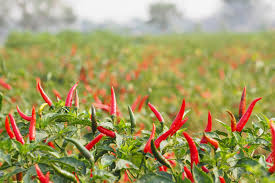
Chilli plants look like this
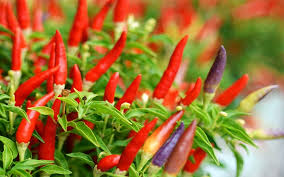
6 hottest kinds of pepper
(SHU = Schovile heat units)
Carolina Reaper 2,200,000 SHU
Today in Science we did a blind taste test, we did this to see if we could identify the difference between swwe, biter, sour and salty. We had to work in pairs, I worked with Isabella, one of us had to be blindfolded and the other had to guide them around , Isabella was first and I was second (taste testing).
Equipment
1. Samples (1-9)
2. Blindfold glasses (we used glasses and paper)
3.Recording chart
4.Ice cream sticks
Method
1. Get saftey glasses and make a blindfold
2.Set up your charts make sure the person knows where to record your responses.
3.Using an icecream stick taste the samples
4.Record your results (including what you thought it was and the taste (bitter, sweet, sour, etc)